Menu Close
  • Clinical
    • In the Literature
    • Key Clinical Questions
    • Interpreting Diagnostic Tests
    • Coding Corner
    • Clinical
    • Clinical Guidelines
    • COVID-19
    • POCUS
  • Practice Management
    • Quality
    • Public Policy
    • How We Did It
    • Key Operational Question
    • Technology
    • Practice Management
  • Diversity
  • Career
    • Leadership
    • Education
    • Movers and Shakers
    • Career
    • Learning Portal
    • The Hospital Leader Blog
  • Pediatrics
  • HM Voices
    • Commentary
    • In Your Eyes
    • In Your Words
    • The Flipside
  • SHM Resources
    • Society of Hospital Medicine
    • Journal of Hospital Medicine
    • SHM Career Center
    • SHM Converge
    • Join SHM
    • Converge Coverage
    • SIG Spotlight
    • Chapter Spotlight
    • From JHM
  • Industry Content
    • Patient Monitoring with Tech
An Official Publication of
  • Clinical
    • In the Literature
    • Key Clinical Questions
    • Interpreting Diagnostic Tests
    • Coding Corner
    • Clinical
    • Clinical Guidelines
    • COVID-19
    • POCUS
  • Practice Management
    • Quality
    • Public Policy
    • How We Did It
    • Key Operational Question
    • Technology
    • Practice Management
  • Diversity
  • Career
    • Leadership
    • Education
    • Movers and Shakers
    • Career
    • Learning Portal
    • The Hospital Leader Blog
  • Pediatrics
  • HM Voices
    • Commentary
    • In Your Eyes
    • In Your Words
    • The Flipside
  • SHM Resources
    • Society of Hospital Medicine
    • Journal of Hospital Medicine
    • SHM Career Center
    • SHM Converge
    • Join SHM
    • Converge Coverage
    • SIG Spotlight
    • Chapter Spotlight
    • From JHM
  • Industry Content
    • Patient Monitoring with Tech

Managing Pain in Postoperative Patients: What the Hospitalist Needs to Know
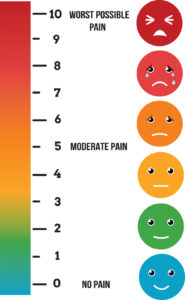
Pain is a completely subjective experience that is the consequence of the filtering, modulating, and distorting of the afferent nerve activity through the affective and cognitive processes unique to each individual. This module discusses why postoperative pain requires treatment, outlines methods for performing an assessment of pain, provides strategies for using patient-controlled analgesia, and summarizes the use of opioid and non-opioid analgesics in the postoperative setting.

Start earning free CME credits today at www.shmconsults.com.
  • 1

    Managing Pain in Postoperative Patients: What the Hospitalist Needs to Know

    October 9, 2016

  • 1

    You Can Earn CME with shmConsults

    October 9, 2016

  • Why Required Pediatric Hospital Medicine Fellowships Are Unnecessary

    October 8, 2016

  • 1

    Palliative Care May Improve End-of-Life Care for Patients with ESRD, Cardiopulmonary Failure, Frailty

    October 7, 2016

  • 1

    Patients’ Out-of-Pocket Spending Increasing

    October 7, 2016

  • What Hospitalists Can Really Learn from Aviation

    October 6, 2016

  • Educating Patients about Sleep Tools

    October 6, 2016

  • How to Better Connect with Patients

    October 5, 2016

  • 1

    How Should Hospitalists Manage Elderly Patients with Dysphagia?

    October 4, 2016

  • 1

    Updated Guideline for Acute Diarrheal Infection

    October 3, 2016

1 … 504 505 506 507 508 … 984
  • About The Hospitalist
  • Contact Us
  • The Editors
  • Editorial Board
  • Authors
  • Publishing Opportunities
  • Subscribe
  • Advertise
  • Copyright © 2026 by John Wiley & Sons, Inc. All rights reserved, including rights for text and data mining and training of artificial technologies or similar technologies.
    ISSN 1553-085X
  • Privacy Policy
  • Terms and Conditions
  • SHM’s DE&I Statement
  • Cookie Preferences