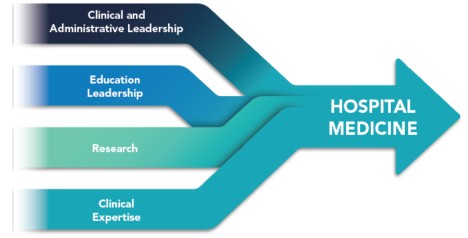
National Hospitalist Day celebrates hospitalists’ contributions to health care on the first Thursday of March. Founded by SHM in 2018, the day will be commemorated on March 5 this year. In honor of the day, The Hospitalist is spotlighting four hospitalists who have varied career paths in hospital medicine.
Clinical and Administrative Leadership
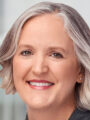
Dr. McNeal
When Tresa McNeal, MD, MBA, SFHM, associate professor at Baylor College of Medicine and associate chief medical officer at Baylor Scott & White Medical Center–Temple, a 670-bed hospital with 800 physician faculty, 500 graduate medical education trainees, and 120 medical students, joined her first hospital medicine group in 2007, the specialty was a fairly new field and staffing model in many areas of the country.
“My colleagues were like-minded individuals interested in caring for patients with acute care needs that were often unanticipated,” she said. She was also attracted to the group’s collegiality and sharing of responsibilities and appreciated the option for different shift models.
At the same time, Dr. McNeal’s mom was diagnosed with amyotrophic lateral sclerosis. “By working as a hospitalist, I could enjoy a rewarding career while also having dedicated time off to care for her because of my shift flexibility,” she said.
Dr. McNeal earned her medical degree at Texas A&M College of Medicine and completed her internal medicine-pediatric residency at Scott & White Memorial Hospital in Temple, Texas.
As an early hospitalist, beyond everyday patient care, Dr. McNeal was mostly interested in medical education. She served for a few years as an associate program director for the internal medicine residency program at Scott & White Memorial.
This leadership experience provided the opportunity to lead the hospital medicine group there. “I learned so much in that role, and I loved how it resulted in partnerships with nursing staff, case management, other specialties, and the executive team,” she said.
This experience led to leadership opportunities, serving as the interim chair of the department of medicine during the COVID-19 pandemic. “It’s interesting how hospital medicine prepared me for a variety of leadership roles in healthcare that I never considered until there was a need at my institution,” she said.
“I love serving our community through [my current] position, which has a variety of responsibilities including being a clinical leader as well as contributing to throughput initiatives, readmission reduction efforts, quality improvement, utilization review, and credentialing,” she said.
Dr. McNeal is also currently serving a two-year term as the chair of the Baylor Scott & White Medical Group Board of Governors—a governance body representing the 4,000 employed physicians and advanced practice professionals across its 53-hospital, not-for-profit, health system in Texas.
Since 2019, she has served as a member of the practice management committee, which provides resources for optimizing hospital medicine operations, leadership structures, staffing, and processes. And, as of 2021, she has served on the State of Hospital Medicine Workgroup/Technical Advisory Panel, advising on the development and review of SHM’s biennial survey. This survey is a comprehensive snapshot representing the practice of hospital medicine, including compensation, structure of shifts and work, administrative support, and benefits.
Dr. McNeal has also served on SHM’s Workforce Experience Survey Workgroup since 2023, which explores factors in the hospital medicine workplace that contribute to professional fulfillment and burnout.
“SHM has helped me to grow professionally and take responsibility for serving in a professional organization to benefit both patients and the profession,” she said.
Education Leadership
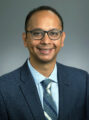
Dr. Malik
When Manpreet S. Malik, MD, FACP, SFHM, started his residency, he wanted to pursue cardiology, then rheumatology, and eventually fell in love with critical care and performing bedside procedures.
“It was a classic case of liking too many things,” said Dr. Malik, who decided to pursue hospital medicine because it would expose him to every subspecialty while still being able to focus on patient care.
Dr. Malik grew up in India and graduated from medical school there, and completed his internal medicine residency at the University of Pittsburgh Medical Center in Pittsburgh. He worked at Virginia Commonwealth University in Richmond, Va., as an assistant professor and as an academic hospitalist for the first six years of his hospitalist career. There, he led the development of a procedure service and led faculty development for a growing hospitalist division.
Currently, Dr. Malik serves as an associate professor of medicine, the program director for the transitional year residency program, and the assistant division director for faculty development in the division of hospital medicine at Emory University School of Medicine in Atlanta. He works clinically at Grady Memorial Hospital, a large safety-net hospital and Level I trauma center in Atlanta. He is also the deputy editor of the Journal of Hospital Medicine’s Visual Vignette column.
“International medical graduates often experience a wider range of healthcare systems and diverse patient populations,” he said. “We’re uniquely positioned to provide empathetic and culturally competent care to increasingly diverse and often vulnerable patient populations.”
Over the past few years, Dr. Malik has led global health initiatives using point-of-care ultrasound (POCUS) in Ethiopia with Emory’s internal medicine residency program. “Creating international programs and giving back whenever possible has been extremely gratifying,” he said.
Dr. Malik co-leads many faculty-development initiatives for Emory’s division of hospital medicine. Emory has the largest academic division in the country, with more than 350 hospitalists at more than 10 sites. “Developing creative programming and resources for my colleagues has been very rewarding,” Dr. Malik said.
He also serves on his department’s promotion and tenure committee. “I enjoy representing hospital medicine and advocating for my colleagues’ great work,” Dr. Malik said.
Regarding SHM, Dr. Malik initially contributed by teaching the bedside procedures pre-course and presented on topics including POCUS and immigrant hospitalists in equity-focused tracks.
Since 2018, Dr. Malik has served on SHM’s Annual Conference Committee, where he has developed several tracks and innovative topics. He will serve as the assistant course director in March at SHM Converge 2026 in Nashville and will be the course director for SHM Converge 2027 in Las Vegas. He is also a member of the Global Hospital Medicine and POCUS Special Interest Groups.
For Dr. Malik, SHM membership has many benefits. “SHM’s in-person and online programming enables members to keep in touch and learn from one another,” he said.
SHM’s regional chapters—which have experienced tremendous growth—help hospitalists in various regions to stay connected.
Moreover, SHM provides opportunities for residents and future hospitalists to showcase their work at regional and national levels, setting them up for success.
SHM’s advocacy at various levels of government—for patient care, hospitalists’ compensation, and equity initiatives—is close to Dr. Malik’s heart. “I owe a lot to SHM for supporting me and giving me a nurturing community where we can all thrive together,” he said.
Research
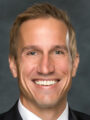
Dr. Prochaska
Micah Prochaska, MD, MSc, SFHM, an assistant professor of medicine at the University of Chicago Medicine and a hospitalist at UChicago Medicine, an academic hospital with more than 400 beds in Chicago, gained hands-on experience as a research assistant and project coordinator for a large, multicenter trial studying the effects of hospitalists on patients and costs during his undergraduate years at the University of Chicago.
“At that time, collaborating with clinicians, statisticians, and research teams gave me foundational skills in data collection, project management, and multidisciplinary investigation,” he said.
Dr. Prochaska earned his medical degree at Wright State Boonshoft School of Medicine in Dayton, Ohio, and completed his internal medicine residency at the University of Chicago. Post residency, he completed a master’s degree in public health science, a research fellowship in health outcomes research, and a fellowship in clinical medical ethics.
“I chose hospital medicine because I liked caring for acutely ill patients and the pace of inpatient care allowed me to pursue my primary interest in training and becoming a clinician investigator, and health outcomes researcher,” he said.
Throughout his medical training, Dr. Prochaska initiated independent research projects, designed studies, and published several manuscripts as a first author. They focused on patient-reported outcomes, such as fatigue as a symptom.
In his current role as a clinician-scientist, Dr. Prochaska’s research continues to focus on how hospital-based interventions—such as red blood cell transfusion and iron for treating anemia— affect patient-reported outcomes.
He has also developed a research program studying “fatigability” as a key outcome measure in hospitalized patients and has published data demonstrating that it’s more sensitive than traditional markers of fatigue or activity in capturing meaningful changes in patients’ health status.1,2 His work has been supported by National Institutes of Health-funded grants and national collaborations.
Dr. Prochaska is also an associate director of the MacLean Center for Clinical Ethics and the director of the inpatient Ethics Consult Service at the University of Chicago. He attends on the ethics consult service and manages clinical ethics consultations, and has developed and oversees a master’s degree track in clinical ethics and a new online certificate program in clinical ethics consultation.
Dr. Prochaska maintains several national and international leadership roles that shape the field of transfusion medicine. He is a contributing author to two editions of the Association for the Advancement of Blood & Biotherapies’ International Red Blood Cell Transfusion Guidelines—the gold standard for transfusion practices worldwide.
He is the incoming chair of the Association for the Advancement of Blood & Biotherapies’ patient blood management guidelines committee. He has previously contributed as an author on two patient blood management guidelines and plans to continue to develop high standards for safe, effective, and patient-centered use of blood products in hospitals worldwide.
He also chaired the annual meeting and research committees of the Society for the Advancement of Blood Management, helping define the organization’s scientific direction and educational priorities.
Dr. Prochaska also serves on SHM’s Research Committee and is a former winner of SHM’s Junior Investigator Award. He has chaired the research portion of the Research, Innovations, & Clinical Vignettes competition at Converge for several years.
“Being an SHM member allows me to maintain strong connections with my research colleagues nationwide,” he said. “Through this network, I stay informed and engaged with the latest work they’re doing in our field.”
Clinical Expertise
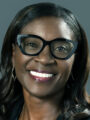 Nana Arthur, MD, FACP, CPE, SFHM, a hospitalist, associate medical director, and medical staff president at Wellstar Douglas Medical Center, a 108-bed community hospital in Douglasville, Ga., believes that she brings clarity and coordination to complex clinical situations while helping multidisciplinary teams stay aligned around safe, reliable, and high-value care.
“Hospitalists meet patients at some of the most critical moments of their care,” Dr. Arthur said. “When things feel uncertain, our role is to bring clarity, coordination, and calm. That work improves care for individual patients and strengthens how the entire hospital functions.”
Dr. Arthur earned her medical degree in Ghana and completed her internal medicine residency at Yale New Haven Hospital–Saint Raphael Campus in New Haven, Conn.
Early in her training, she was influenced by mentors who modeled composed leadership under pressure and emphasized interdisciplinary collaboration. Those experiences shaped her belief that hospitalists are uniquely positioned to bridge clinical care, teamwork, and hospital operations.
In her daily practice, Dr. Arthur cares for a broad and diverse inpatient population, managing complex medical conditions across the adult age spectrum. She incorporates geriatric principles when appropriate—particularly for patients with frailty, delirium, or cognitive vulnerability—while maintaining a comprehensive hospital medicine practice. “Thoughtful medication review, collateral history, and attention to transitions of care matter for many hospitalized patients,” she said.
Collaboration is central to Dr. Arthur’s leadership approach. She adapts to a moment’s need—whether stabilizing high-acuity clinical situations, aligning multidisciplinary teams, or supporting colleagues through operational change. She emphasizes shared accountability and role clarity as essential to reliable care delivery.
“Reliable care doesn’t come from individual effort alone—it comes from teams sharing clarity, accountability, and trust,” she said.
Her commitment to communication extends beyond the bedside. As a peer coach, Dr. Arthur works with physicians and advanced practice providers to strengthen communication behaviors that build trust, improve patient experience, and support team cohesion.
“Clear communication shapes patient understanding and team performance,” she said. “It’s foundational to safe, high-quality care.”
Dr. Arthur has also served as interim chief medical officer within Wellstar. That experience broadened her understanding of quality, operations, and organizational culture, and it strengthened her ability to connect frontline realities with system-level priorities.
“I bring clinical credibility and operational insight to leadership work,” she said. “My focus has always been on delivering high-value inpatient care while supporting the people and processes that make it possible.”
As medical staff president, Dr. Arthur focuses on physician engagement, interdisciplinary partnership, and care reliability—particularly during transitions of care. She takes pride in work that improves coordination and consistency across teams, recognizing how small process improvements can meaningfully influence outcomes.
Dr. Arthur stays engaged with SHM through national meetings, educational programming opportunities, and ongoing professional development. She uses SHM resources to stay current on clinical care, leadership development, and quality improvement strategies.
Karen Appold is an award-winning journalist based in Lehigh Valley, Pa.
References
1. Prochaska MT, et al. Fatigability: A new perspective on and patient-centered outcome measure for patients with anemia. Am J Hematol. 2020;95(7):E166-E169. doi: 10.1002/ajh.25803.
2. Prochaska MT, et al. The effect of red blood cell transfusion on fatigability after hospital discharge. Blood Adv. 2020;4(22):5690-5697. doi: 10.1182/bloodadvances.2020003364