Menu Close
  • Clinical
    • In the Literature
    • Key Clinical Questions
    • Interpreting Diagnostic Tests
    • Coding Corner
    • Clinical
    • Clinical Guidelines
    • COVID-19
    • POCUS
  • Practice Management
    • Quality
    • Public Policy
    • How We Did It
    • Key Operational Question
    • Technology
    • Practice Management
  • Diversity
  • Career
    • Leadership
    • Education
    • Movers and Shakers
    • Career
    • Learning Portal
    • The Hospital Leader Blog
  • Pediatrics
  • HM Voices
    • Commentary
    • In Your Eyes
    • In Your Words
    • The Flipside
  • SHM Resources
    • Society of Hospital Medicine
    • Journal of Hospital Medicine
    • SHM Career Center
    • SHM Converge
    • Join SHM
    • Converge Coverage
    • SIG Spotlight
    • Chapter Spotlight
    • From JHM
  • Industry Content
    • Patient Monitoring with Tech
An Official Publication of
  • Clinical
    • In the Literature
    • Key Clinical Questions
    • Interpreting Diagnostic Tests
    • Coding Corner
    • Clinical
    • Clinical Guidelines
    • COVID-19
    • POCUS
  • Practice Management
    • Quality
    • Public Policy
    • How We Did It
    • Key Operational Question
    • Technology
    • Practice Management
  • Diversity
  • Career
    • Leadership
    • Education
    • Movers and Shakers
    • Career
    • Learning Portal
    • The Hospital Leader Blog
  • Pediatrics
  • HM Voices
    • Commentary
    • In Your Eyes
    • In Your Words
    • The Flipside
  • SHM Resources
    • Society of Hospital Medicine
    • Journal of Hospital Medicine
    • SHM Career Center
    • SHM Converge
    • Join SHM
    • Converge Coverage
    • SIG Spotlight
    • Chapter Spotlight
    • From JHM
  • Industry Content
    • Patient Monitoring with Tech

SARS serum neutralizing antibodies may inform the treatment of COVID-19

The immune responses of specific antibodies were maintained in more than 90% of recovered SARS-CoV patients for 2 years, raising the likelihood that the similarly behaving SARS-CoV-2 might provoke the same response, according to an online communication published in the Journal of Microbiology, Immunology and Infection.
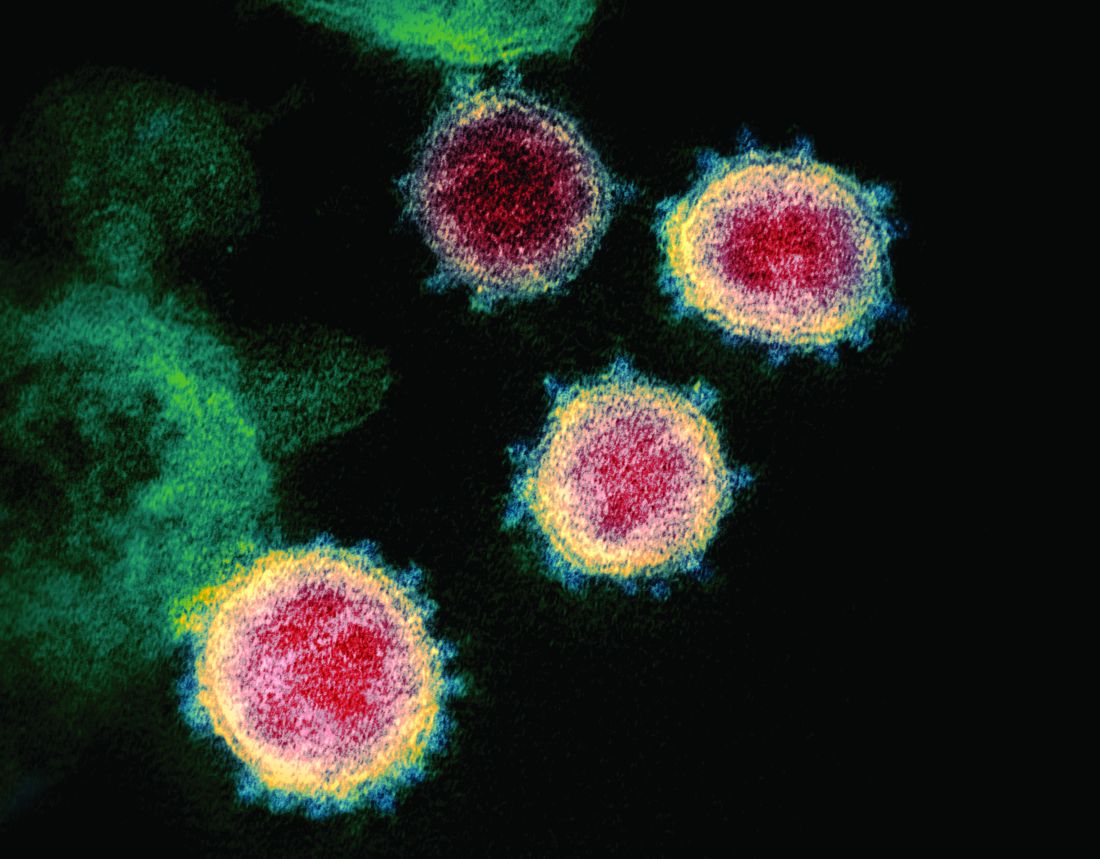
This transmission electron microscope image shows SARS-CoV-2—also known as 2019-nCoV, the virus that causes COVID-19—isolated from a patient in the U.S. Virus particles are shown emerging from the surface of cells cultured in the lab.

Courtesy NIAID-RML

The authors cited a cohort study of convalescent SARS-CoV patients (56 cases, from the Beijing hospital of the Armed Forces Police, China) that showed that specific IgG antibodies and neutralizing antibodies were highly correlated, peaking at month 4 after the onset of disease and decreasing gradually thereafter.

This and other studies suggest that the immune responses of specific antibodies were maintained in more than 90% of recovered SARS-CoV patients for 2 years, according to the authors.

However, of particular concern is the fact that only 11.8% of patients acquire specific SARS-CoV Abs in the early period after recovery at day 7, not reaching 100% until day 90, which highlights the importance of the detection of antibody titers for convalescent COVID-19 patients, according to the authors. “Otherwise, these patients with low titers of antibodies may not be efficient for the clearance of SARS-CoV-2.”

The authors also cited a recent study that showed how neutralizing antibody from a convalescent SARS patient could block the SARS-CoV-2 from entering into target cells in vitro, and suggested that previous experimental SARS-CoV vaccines and neutralizing antibodies could provide novel preventive and therapeutic options for COVID-19.

“These experiences from SARS-CoV are expected to have some implications for the treatment, management and surveillance of SARS-CoV-2 patients,” the authors concluded.

[email protected]

SOURCE: Lin Q et al. J Microbiol Immunol Infect. 2020 Mar 25. https://doi.org/10.1016/j.jmii.2020.03.015.
  • 1

    SARS serum neutralizing antibodies may inform the treatment of COVID-19

    April 2, 2020

  • 1

    Which tube placement is best for a patient requiring enteral nutrition?

    April 2, 2020

  • COVID-19: More hydroxychloroquine data from France, more questions

    April 1, 2020

  • What if a COVID-19 test is negative?

    April 1, 2020

  • 1

    San Diego County CMO vigorously leads COVID-19 response team

    April 1, 2020

  • 1

    Case fatality rate for COVID-19 near 1.4%, increases with age

    April 1, 2020

  • Maintaining cancer care in the face of COVID-19

    April 1, 2020

  • States allow doctors to practice across state lines during COVID-19 crisis

    April 1, 2020

  • 1

    Predictors of bacteremia in children hospitalized with community-acquired pneumonia

    April 1, 2020

  • Firings, furloughs, and pay cuts in advance of COVID-19 surge

    April 1, 2020

1 … 287 288 289 290 291 … 984
  • About The Hospitalist
  • Contact Us
  • The Editors
  • Editorial Board
  • Authors
  • Publishing Opportunities
  • Subscribe
  • Advertise
  • Copyright © 2026 by John Wiley & Sons, Inc. All rights reserved, including rights for text and data mining and training of artificial technologies or similar technologies.
    ISSN 1553-085X
  • Privacy Policy
  • Terms and Conditions
  • SHM’s DE&I Statement
  • Cookie Preferences