Maheswara Reddy Koppula, MD, who was born in India and now works as a physician in the U.S., had fulfilled the requirements of his J-1 visa, which required him to work in a medically underserved area of the U.S. After holding positions in Tennessee, Ohio, and New York, Dr. Koppula, one of the thousands of foreign-born and foreign-trained hospitalists helping to ease a shortfall of physicians in the U.S., now held an H-1B visa and wanted to find a job in which he could have a teaching role.
“I just wanted to contribute to future physicians,” Dr. Koppula said. He got his wish when he landed a teaching job at Crozer-Chester Medical Center in Upland, Pa., southwest of Philadelphia.
But only about two years later, in May of 2025, the hospital closed, leaving its employees rattled and saddened.
For Dr. Koppula, it was more than a lost job and painful departure from his colleagues. On the H-1B, living in the country legally required him to work as a physician. Without a job as a doctor, he worried he might have to leave the country.
“It was a very stressful time,” he said. “Even a few days out of the status of the H-1, I don’t know how it’s going to affect my stay in the U.S.”
To his relief, his former employer helped him find a position working in post-acute care at a nursing home. He is now working at the Wright Center for Graduate Medical Education, again as a teaching physician. It was as though he had been pulled back to safety from the edge of a cliff.
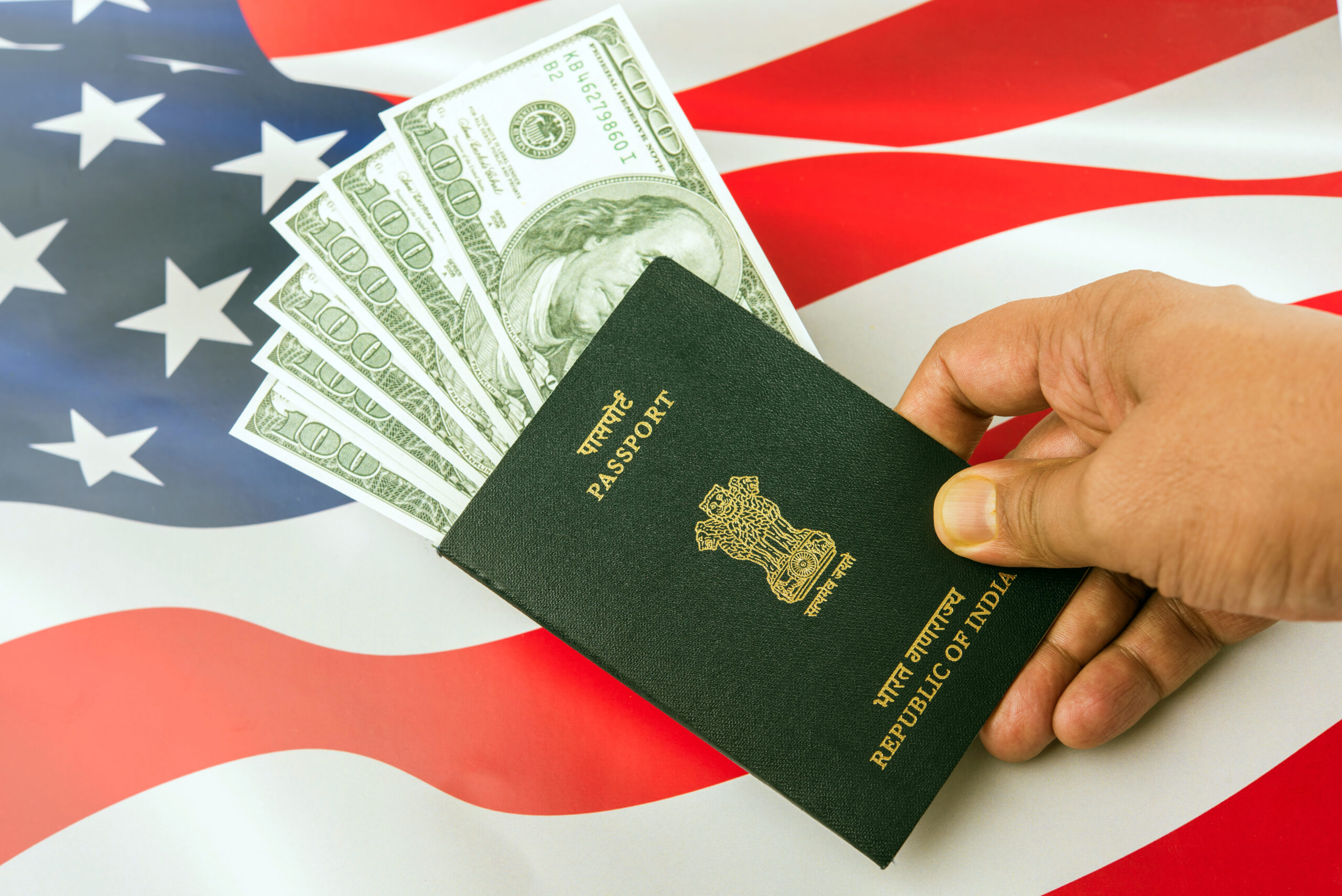
Dr. Koppula’s experience illustrates the profound uncertainty that shadows the lives of tens of thousands of foreign-born physicians who work in the U.S., many as hospitalists. It is a shaky existence that has recently come into the spotlight as the current administration considered imposing a $100,000 fee on H-1B visas, a fee that would be impossible for many would-be physicians to pay.
Even if physicians end up being exempt from this fee, foreign-born doctors already working in the U.S. say their lives would continue in limbo. The reason is, primarily, that the number of green cards per year available to any given country is capped at 7% of total green cards, no matter how big the country or how many people apply. And physicians fall under this cap, which also applies to workers in other professions, such as the tech industry. This results in wait times that can last decades for physicians from countries like India that produce a large number of well-trained physicians. The wait times bring complications and a lack of permanence in the professional and personal lives of the physicians, often with a near-existential degree of worry.
Filling a Crucial Need
It is an unfortunate irony, these physicians and SHM leaders say, that such significant life hurdles should be in place for highly trained doctors without whom, in many parts of the country, the physician shortage would be even more severe than it already is.
According to a letter signed by SHM and all the other major U.S. medical associations, in response to the proposal of the $100,000 fee for physician H-1B visas, the U.S. is projected to have a shortfall of 86,000 physicians by 2036. In 2024, 23% of the licensed physicians in the U.S. were foreign-trained, and, in 2021, about 64% of foreign-trained physicians were practicing in areas that are considered underserved.1
Between 2001 and 2024, almost 23,000 physicians on H-1B visas worked in underserved communities. And almost 21 million Americans live in areas where foreign-trained physicians account for half of all physicians.
Estimates of how many U.S. physicians are foreign-trained hover around 25%, with higher estimates for the number working in internal medicine and as hospitalists.2
“There is no way under the current structure that we’re going to train enough [physicians], so the need is only going to grow,” said Josh Boswell, JD, chief legal officer for SHM. “In an ideal world, we could get a special H-1B-like visa that’s for physicians that has a pathway to citizenship or green card connected to it.”

Dr. Cowart
Jennifer Cowart, MD, a hospitalist and chair of SHM’s public policy committee, said the medical field in the U.S. needs to boost medical training efforts of U.S. citizens, while at the same time easing the process for the foreign-born physicians who are so vital.
“Even if we built a new medical school tomorrow, that newly minted doctor who starts medical school and goes all the way through med school, then residency, and then enters the workforce— we’re like seven, eight years down the road before they ever hit the workforce,” she said. “We have system-wide shortages now.”
Providing Good Care
Data suggest that physicians trained abroad provide care that is similar in quality to that of those trained in the U.S. A 2017 study in the British Medical Journal examined the outcomes of hospitalized patients in the U.S., primarily using Medicare data.3
The researchers found that 44.3% of general internists in the U.S. were international medical graduates (IMG), that they were 46.1 years old compared to 47.9 years old for U.S.-trained physicians, and were more likely to work in medium-sized, non-teaching, for-profit hospitals, and at hospitals without intensive care units.
More of the patients treated by IMG physicians were non-white. They had lower median household income, were more likely to have Medicaid coverage, and had more comorbid conditions. The 30-day mortality rate was 11.0% for patients of internationally trained physicians compared to 11.9% for U.S. graduates. This finding was essentially unchanged after accounting for other physician characteristics and for hospital-specific effects.
The 30-day readmission rate for internationally trained physicians was 16.0%, and 15.4% for U.S.-trained physicians, but when adjusted for hospital effects, these rates no longer differed, suggesting that the difference was driven by the hospital in which the physicians worked, the researchers found.
The data showed that the cost of care was slightly higher for international graduates than U.S. graduates—$1,145 compared to $1,098.
Despite filling a crucial need in the U.S. healthcare system and providing good care, physicians working in the U.S. on an H-1B visa face many obstacles that other physicians do not. They describe complications that pose challenges not only for their own professional and personal lives, but also for the employers who rely on them.
Facing Obstacles and Restrictions

Dr. Yellappa
Naveen Yellappa, MD, who recently moved to a job as medical director with Sound Physicians in Florida, after nine years working with the Geisinger Health System in Wilkes-Barre, Pa., said he visited India in the early part of 2020. When visiting, he needs to have his visa stamped as a requirement of his H-1B visa. Historically, this has been a process that takes about two weeks. But this time, it was delayed. It took more than six weeks. By the time his visa was stamped, the COVID-19 pandemic had started to become a serious global concern. Just before his passport could be returned to him, India went into lockdown, the consulate closed, and there was no mail.
“I couldn’t come back because I didn’t have my passport, and the flights stopped,” Dr. Yellappa said.
He was stuck—and began to worry that he might lose his job and his residency status in the U.S.
Geisinger, his employer at the time, paid him throughout March, April, and May, he said. In June, he learned that this payment was going to stop, but he was able to return to the U.S. before this happened. Once he got back to his job, he worked extra time to make up for the pay that was provided while he was gone, he said.
Dr. Yellappa applied for his green card in 2016 and does not know when he will receive it. He is trying to take on more leadership roles to bolster his CV, in the hopes that it might boost his chances for getting EB-1A status, reserved for those with extraordinary ability, which substantially cuts down on the wait time for a green card.
In the meantime, he sometimes muses with friends about the possibility of a business venture, but since only passive income—and no active income—can come from a source other than his visa-sponsoring employer, he is too apprehensive to become involved in such a project.
“The green card would give you the freedom of making a decision, whatever the decision may be,” he said. “I just don’t have the freedom, so I don’t dare to think about it.”
Despite spending more than a decade in the U.S., everything he does here seems to be influenced by his visa status. He also said he is now limited in his growth in leadership roles, because jobs that are higher-ranking than his current position are typically not visa-sponsored positions.
“The world’s your oyster in the U.S., you can really do what you want to do, you have the freedom to do that—unless you’re on a visa,” he said.

Dr. Patel
Mihir H. Patel, MD, MPH, MBA, CLHM, SFHM, a hospitalist and digital-health–focused physician informatics leader at Ballad Health in Johnson City, Tenn., applied for a green card in 2011 and finally received it in 2022, earlier than he otherwise would have because the COVID-19 pandemic halted the processing of visas involving U.S. embassies overseas, so employment-based cases like his moved up in line.
But when he was a visa holder, his grandmother in India passed away just after he had started a job on a J-1 waiver, which allows foreign-born medical graduates who are on an exchange visitor visa to remain in the U.S. if they work in an underserved area for three years. If Dr. Patel had traveled to India, he would have needed a new visa stamp from the U.S. embassy to re-enter the country, even though he already had legal visa status. The process—applying, scheduling the interview, and awaiting approval—can take months and carries the risk of delay or denial.
“She took care of me for almost my whole childhood,” he said. “She was very near and dear to me. But I could not go because of all this uncertainty.”
Dr. Patel said that under the H-1B visa, he could work only for his sponsoring employer, which constrained how he managed his finances and prevented him from exploring any other active or entrepreneurial income opportunities. Viable business ideas were conceived—including a venture to provide telemedicine care in remote areas—but never acted upon.
He said that much of the vigor needed for ventures outside someone’s primary employment is lost as you get older, and by the time you get a green card, if that day ever comes, H-1B holders might no longer have the inclination to do it.
“When there is a time to do it, you don’t have the luxury to do it,” he said. “And when you have the luxury, you probably don’t have enough energy to do it.”
He said U.S. immigration laws should better reflect the nation’s healthcare needs by treating physicians differently from other employment-based visa categories.
“If there’s a true need for physicians,” he said, “then the policy should be aligned with that reality.”
Mr. Boswell said the hurdles presented by visa status were on full display during the COVID-19 crisis, when hospitals that were hardest hit desperately needed physicians. Many H-1B-holding physicians in areas with less severe outbreaks wanted to travel to these hospitals to help, but were unable to go due to visa restrictions.
“That was the truth of it,” he said. “They could not go help in a national emergency as a physician, just because of their visa status.”
Such scenarios show how this decade-or-longer temporary H-1B status affects more than just individual physicians—it affects hospitals and health systems. Dr. Cowart said that when a resident, for example, has a visa complication arise while abroad, it’s also a problem for their hospital back in the U.S.
“Residency programs are already scheduled out for the whole year,” she said. “And so if a trainee doesn’t arrive for six months due to no fault of their own, the training program is scrambling, they’re having everybody else having to work extra, they’re having to call in backup—it puts kind of a burden on everybody.”
Dr. Koppula said he would like the policy of the U.S. to embrace the idea that physicians are not just “skilled workers” in the same way that, say, a software engineer is. Physicians are directly responsible for the health and lives of people in their community.
“We are not only skilled workers. We are beyond skilled workers. So that’s the distinction that they have to make.”
Tom Collins is a medical writer based in South Florida.
References
1. SHM joins letter requesting physician exemption from new H-1B filing fees. September 26, 2025. SHM website. https://www.hospitalmedicine.org/letters/shm-joins-letter-requesting-physician-exemption-from-new-h-1b-filing-fees/. Published September 26, 2025. Accessed December 8, 2025.
2. Olazagasti C, Florez N. Going back home: understanding physician migration to the United States. JCO Glob Oncol. 2023;9. doi: 10.1200/GO.23.00332.
3. Tsugawa Y, et al. Quality of care delivered by general internists in US hospitals who graduated from foreign versus US medical schools: observational study. BMJ. 2017;356:j273. doi: 10.1136/bmj.j273.