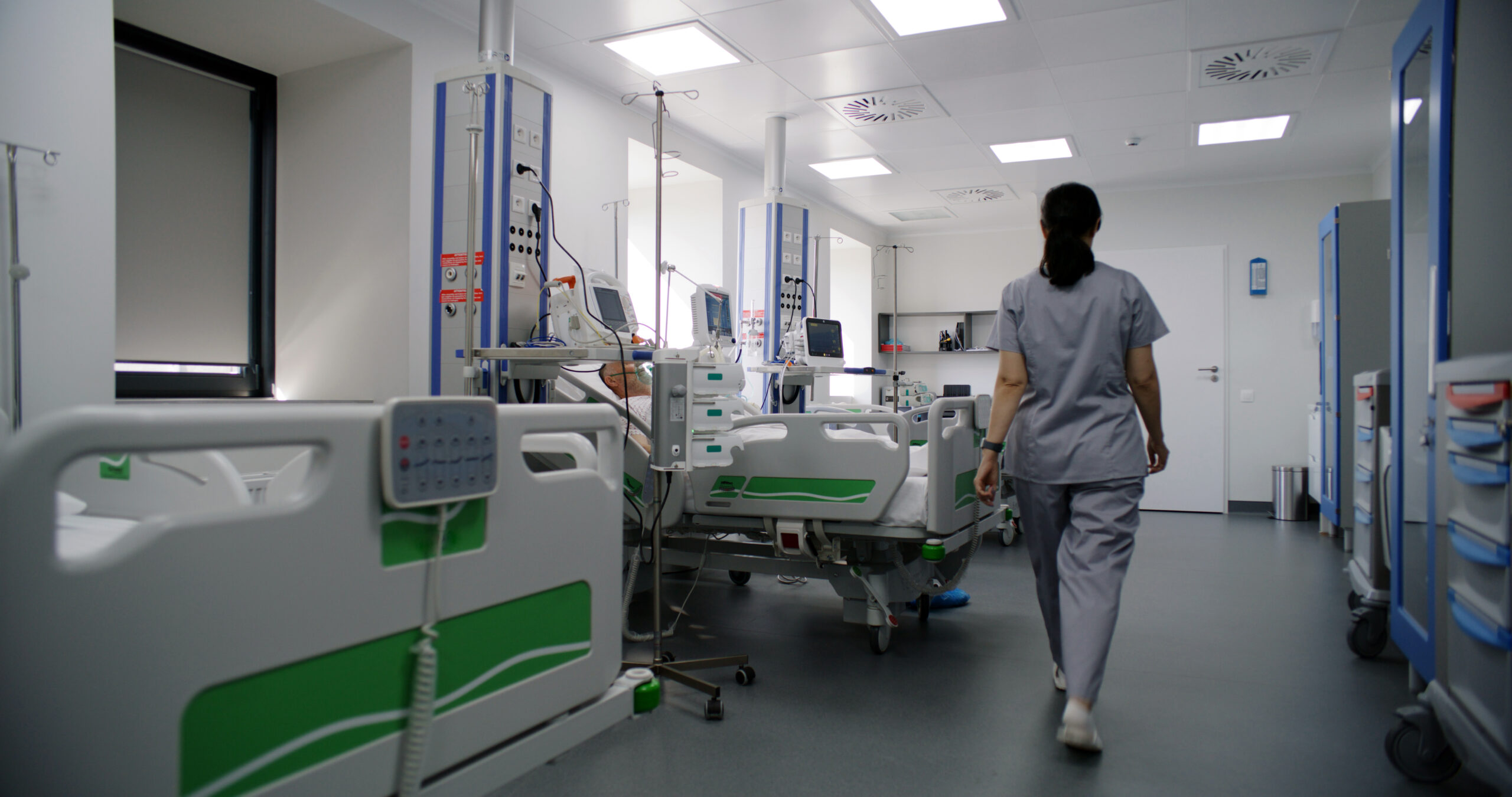
Boarding patients in the emergency department (ED) has become commonplace at many hospitals, which can cause bottlenecks and negatively affect patients. Fortunately, hospitalists have found some ways to successfully manage these patients’ continuity of care, and they’ve implemented strategies to reduce overcrowding.

Dr. Rankin
Many factors contribute to ED overcrowding. Since the onset of the COVID-19 pandemic, the University of New Mexico Hospital, an academic hospital with 535 beds in Albuquerque, N.M., has had to board admitted patients in the ED. “This would have been unthinkable before the pandemic,” said Alex Rankin, MD, MBA, associate chief medical officer in the department of family medicine, who noted that some patients remain there for days.
Dr. Rankin attributes the ongoing surge to the state of New Mexico not having enough inpatient beds for its population, and the hospital being the state’s only acute Level I trauma and referral center.

Dr. Migliore
According to Christopher Migliore, MD, MS, FACP, FHM, an assistant professor of medicine at Columbia University College of Physicians and Surgeons, and director of general medicine consult and perioperative services, and a medicine attending at Columbia University Medical Center, both in New York, a shift has occurred from episodic boarding crises to sustained high boarding levels. “In the past, boarding was tied to flu surges or isolated staffing shortages; now it reflects a chronic strain in discharge throughput, intensive care unit capacity, and post-acute bed availability,” he said.

Mr. Cushing
When his hospital, an urban, academic, medical center and tertiary-care facility with 1,500 inpatient beds, has spikes in ED boarding, a lack of access is a contributing factor, said Will Cushing, MHA, MMSc, PA-C, SFHM, executive director of Yale New Haven Hospital’s hospitalist service, and an assistant clinical professor at Yale University School of Medicine, both in New Haven, Conn.
“Patients with conditions that could have been treated by a primary care physician or specialist, who didn’t seek care early on, now need treatment in the emergency department because their conditions worsened,” he said.

Dr. Kankani
According to Venu Gopal Kankani, MD, FACP, FHM, internal medicine hospitalist, attending physician, and medical officer of the day at Geisinger Community Medical Center (GCMC), a community medical center with 297 beds, and assistant professor of medicine at Geisinger Commonwealth School of Medicine, both in Scranton, Pa., ED volumes have increased in recent years due to reduced inpatient bed capacity at neighboring hospitals, delays in post-acute care placement (often driven by insurance limitations or social barriers), and lack of available skilled-nursing-facility and rehabilitation beds.
Post-holiday surges are a recurring challenge, often driven by medication non-compliance, dietary indiscretion, or missed dialysis sessions, Dr. Kankani said. Additionally, a growing number of ED boarders have complex social needs, behavioral health conditions, and substance use disorders, or are elderly individuals requiring placement in long-term care facilities. These trends have become more pronounced in the post-pandemic era.
Staffing shortages also significantly contribute to ED boarding. Deficits extend beyond nursing and include environmental services, patient transport, and ancillary departments, all of which play critical roles in maintaining throughput. Late or delayed discharges—due to pending consults, incomplete test results, or discharge orders written late—reduce early bed availability and slow overall patient flow. Administrative policies governing prior authorizations, insurance approvals, or post-acute placement can also delay discharge.
Impact on Workflow
ED boarding results in bottlenecks, which create additional complexity for consults and transfers because delays in movement from the ED reverberate throughout a hospital’s capacity, Dr. Migliore said.
As a result, hospitalists must see patients in the ED in non-ideal conditions—limited space, less continuity with the primary team, and logistical barriers for interdisciplinary rounds. Each of these, if not handled carefully, can increase length of stay.
Hospitalists need to straddle the fence and manage competing priorities on medicine floors as well as in the ED, Mr. Cushing said. The emergency department does the same thing by trying to manage some boarding patients while also handling incoming volume. “It’s a difficult balance to strike because we don’t stop the influx of patients, unlike some hospitals,” he said.
Morning rounds often begin in the emergency department at GCMC. Here, hospitalists track newly admitted patients who remain boarded while awaiting inpatient bed placement. “This fragmentation disrupts the natural flow of multidisciplinary rounds and delays the timely initiation of care plans,” Dr. Kankani said.
Prolonged boarding creates a cascading effect throughout the department: stretchers remain occupied, which reduces capacity for incoming patients; triage-to-provider times increase; and delays occur in initiating care for acutely ill patients.
Effects on Patients

Dr. Talari
ED boarding negatively impacts patients’ care and safety, as well as hospital reimbursement and operational efficiency, while increasing health care costs, said Goutham Talari, MD, FACP, SFHM, a hospitalist in the department of internal medicine at AdventHealth, a community hospital in DeLand, Fla., and assistant professor at Florida State University College of Medicine in Daytona Beach, Fla. Research shows that patients with higher acuity illnesses and prolonged ED boarding are vulnerable to medical errors.1-4 These patients often experience worse outcomes, and hospitals may see lower performance metrics primarily due to delays in care, prolonged length of stay, and increased patient discomfort.2,4-7
For example, limited access to private bathrooms, delayed meals, anxiety, disrupted sleep, and restricted family visits can all impact the patient experience. The most frequent question from ED boarders, “When will I get a room?” reflects their anticipation and hope for comfort, rest, and continuity of care.
Boarding also delays the initiation of essential inpatient protocols, such as early mobilization, delirium prevention strategies, and chronic disease optimization, Dr. Kankani added. These missed opportunities can affect recovery trajectories and extend hospital stays.
“It’s disheartening to witness patients waiting for prolonged periods in the emergency department, knowing that their outcomes and comfort could improve more rapidly with a timely transfer to an inpatient setting supported by the full multidisciplinary team,” Dr. Kankani said.
Vulnerable Patient Populations
Some patient populations are more affected by boarding delays in the ED. Geriatric patients are at increased risk for delirium, functional decline, falls, and pressure injuries, Dr. Kankani said.
Behavioral health and psychiatric patients frequently experience the longest boarding times—sometimes days or weeks—due to limited inpatient psychiatric beds. Risk of self-harm, agitation, or behavioral escalation increases when they’re boarded in non-psychiatric ED spaces.
Patients requiring intensive-care-unit-level care or specialized units (e.g., step-down, cardiac, or isolation beds) are often the most delayed in placement, Dr. Kankani continued. Boarding in the ED without advanced monitoring or respiratory support increases morbidity and mortality risk.
Patients with chronic conditions and multiple comorbidities require multidisciplinary inpatient management. Delays in treatment can lead to clinical deterioration and extended hospitalization.
Homeless, uninsured, or underinsured patients often face longer discharge or transfer delays due to placement challenges, Dr. Kankani said.
In general, patients who don’t have anyone to advocate for them at the bedside are more likely to have longer lengths of stay because they may not be aggressively managed during their ED stay, Mr. Cushing said. These may include patients with cognitive decline or language barriers and elderly patients.
Managing Continuity of Care
To ensure continuity of care and reduce variability, a best practice is to have a single clinician from a hospital medicine group designated to oversee boarded patients, said Kevin M. Donohue, DO, FACP, FHM, a practicing hospitalist based in Lexington, Ky., and regional medical director for Team Health, which supports both emergency department and hospital medicine programs. “This approach promotes communication between nursing staff and clinicians, streamlines decision making, and reduces the chaos that can accompany undifferentiated or critically ill patients arriving from outside facilities,” he said.

Dr. Donohue
Dr. Donohue also recommended floating inpatient nurses to the emergency department to care specifically for boarded patients. These nurses are familiar with inpatient workflows and hospitalist-driven management, which differs significantly from the emergency medicine model.
A hospital medicine team should prioritize medication reconciliation, timely communication with subspecialists, and prompt evaluation of patients upon arrival to ensure continuity of care from the beginning of their hospitalization, Dr. Donohue said.
For hospitalists at GCMC, the work of caring for ED-boarded patients begins long before those patients ever reach an inpatient bed. “We often start by reviewing charts, placing orders, and initiating treatment plans directly from the emergency department, ensuring that essential therapies aren’t delayed simply because a room isn’t available,” Dr. Kankani said.
Collaboration with case management and social work begins early, so discharge planning can start even before transfer to a floor occurs. “This early coordination not only prevents bottlenecks, but also helps to keep hospital flow moving,” Dr. Kankani said.
As the medical officer of the day, Dr. Kankani works closely with nursing supervisors and the bed-management team to identify prolonged boarders and prioritize their transfers.
University of New Mexico Hospital’s hospitalists admit patients onto their teams when they’re in the emergency department, and they remain on that team when they’re moved to a room, which preserves continuity. For teams with learners, such as students and residents, this continuity allows them to care for the same patient from admission to discharge, Dr. Rankin said.
Coordination in Real Time
Modern technologies allow hospitalists to communicate and track patients’ care in real time, which also contributes to continuity of care.
In 2025, Yale New Haven Hospital went live with a mobile application within Epic called Secure Chat. HIPAA compliant, it’s a reliable directory of each patient and their care team members, and allows them to send one-on-one or group messages. Physicians and advanced practice providers use Epic’s Haiku app on their work smartphones, which allows them to access and manage patient information in the electronic health record securely.
Nurses use Epic’s Rover app to perform tasks, such as medication administration, specimen collection, and charting, on a mobile device. They can scan patient and medication barcodes for positive identification. “Being on one platform has made a big difference in the ease of communication and transparency of each patient’s care team members in a timely manner,” Mr. Cushing said.
According to Dr. Kankani, secure messaging systems, such as TigerConnect, help to keep everyone aligned in real time, ensuring that no patient is ever “out of sight, out of mind,” even when they’re waiting in the emergency department.
Working as a Team
Hospitalists naturally play a central role in throughput and capacity planning, as they sit at the intersection of patient admission, inpatient management, and discharge processes, Dr. Donohue said.
Prioritizing early discharges helps decompress the emergency department and reduces boarding during high-volume times, Dr. Donohue said. His institution’s hospital medicine program aims for 50% of discharges to be entered by 11 a.m., a metric that it continually meets.
By collaborating with ED physicians, consultants, nursing, case management, and ancillary teams, hospitalists help design strategies to optimize admissions, streamline discharges, and reduce lengths of stay while maintaining high-quality care, patient outcomes, and patient experience, Dr. Talari said. Their leadership fosters proactive problem-solving, improved communication across departments, and a culture of continuous improvement.
It’s essential for hospitalists to be actively involved in hospital committees and leadership roles, as their positions at the center of patient flow, combined with their broad clinical perspective and frontline experience, make them invaluable contributors to organizational success.
Strategies to Reduce ED Boarding
GCMC has found a variety of ways to decrease ED boarding. For example, information from interdisciplinary rounds and updates from attending physicians on current and anticipated discharges in the electronic bed management system help to identify potential patient flow bottlenecks proactively.
Daily 2 p.m. follow-up rounds involving the attending physician, nurse leader, and care-management team focus on reviewing patient status, plan of care, and anticipated discharge. Identifying early discharges for the next day allows coordination of transport and family communication ahead of time, streamlining the discharge process and reducing avoidable delays, Dr. Kankani said.
During high census, every effort is made to minimize the number of blocked semi-private beds by assigning compatible patients as roommates, Dr. Kankani said. Isolation precautions, related to gastrointestinal or respiratory illnesses, are reviewed and discontinued when clinically appropriate to optimize bed use.
A pharmacy program called Med2Beds ensures that patients who are discharged from the emergency department or inpatient beds get all newly prescribed medications delivered to their bedside to ensure safe and timely discharges.
Virtual discharge nurses guide patients and families through the entire discharge process, supporting and offloading inpatient nursing staff, Dr. Kankani continued. This approach expedites discharges, enhances patient safety, and facilitates timely bed availability for incoming admissions.
Patients being discharged home are encouraged to be moved to the discharge lounge when appropriate, which is staffed with nurses when they’re awaiting rides. This initiative facilitates earlier bed turnover and increases inpatient bed availability.
The University of New Mexico Hospital addresses ED overcrowding by providing extra resources when needed. For example, it opens floor unit hall beds to help decompress the emergency department.
Ideas for Improvements
Yale New Haven Hospital’s administration, hospitalist team, and ED staff are actively working to get incremental full-time equivalents or staffing to develop an ED boarding team in an effort to improve patients’ care and experience. This medicine unit would live within the emergency department’s footprint.
Dr. Talari recommends strategic, system-level changes that would enhance flexibility, capacity, and coordination hospital-wide. For example, creating observation units for short-term stays or for patients under observation could significantly reduce ED congestion. These units would provide a safe and efficient setting for patients who require brief monitoring or diagnostic clarification, freeing ED beds for acute cases.
Prioritizing consultations, radiology, and other ancillary services for potential discharge patients, particularly those boarding in the emergency department or under observation, would significantly improve care transitions and enhance overall patient flow.
Providing ongoing opportunities for nurses to gain experience in multiple hospital areas, such as the emergency department, medical floors, and progressive care (stepdown) units, could help to build a versatile workforce. This cross-training would allow staff to be deployed efficiently during periods of high demand, promoting teamwork and ensuring consistent care standards.
Designing modified units that can flex between regular medical beds, telemetry beds, and progressive care (stepdown) beds would provide adaptability during surges, Dr. Talari said. This model would enable hospitals to respond dynamically to changes in census and patient acuity, ensuring that resources are used efficiently.
Dr. Talari also recommends developing different rounding models that prioritize or start rounds on ED boarding patients. This would facilitate early downgrading of ED boarders, enabling them to be transferred to bed-available units. This would also expedite early discharges, allowing those beds to be allotted to patients waiting in the emergency department.
Turning Challenges into Opportunities
Another drawback of ED boarding is that it contributes to hospitalists’ burnout by eroding efficiency and forcing them to work in less controlled environments. “What sustains me is the ability to improve systems, mentor trainees navigating these challenges, and see the direct impact of smoother throughput on patient care,” Dr. Migliore said.
Dr. Kankani is motivated by his colleagues’ unwavering commitment to patient care. “Witnessing nurses, physicians, case managers, and ancillary staff come together under pressure—often with limited resources—reinforces the shared purpose that drives our work beyond logistical hurdles,” he said. “The gratitude expressed by patients and families, even in less-than-ideal circumstances, is a powerful reminder of why our work matters.”
Ultimately, hospitalists stand at the forefront of transforming the challenges of ED boarding into opportunities for growth, innovation, and excellence, Dr. Talari concluded. Their leadership, adaptability, and unwavering dedication to patient-centered care drive meaningful change across the hospital system.
“Hospitalists embody the best of modern medicine, turning every challenge into an opportunity for progress and leading the way toward a safer, more efficient, and more compassionate health care system,” Dr. Talari said.
Karen Appold is an award-winning journalist based in Lehigh Valley, Pa.
References
1. Kolikof J, et al. Emergency department boarding, crowding, and error. J Am Coll Emerg Physicians Open. 2025;6(4):100169. doi: 10.1016/j.acepjo.2025.100169.
2. Agency for Healthcare Research and Quality. AHRQ summit to address emergency department boarding. AHRQ website. https://www.ahrq.gov/sites/default/files/wysiwyg/topics/ed-boarding-summit-report.pdf. Published March 2025. Accessed December 7, 2025.
3. Blank JA, et al. Characteristics, clinical care, and outcomes of sepsis among patients boarding in the emergency department. J Hosp Med. 2025;20(4):368-373. doi: 10.1002/ jhm.13536.
4. Joseph JW, et al. Boarding in the emergency department: specific harms to older adults and strategies for risk mitigation. Emerg Med Clin North Am. 2025;43(2):345-359. doi: 10.1016/j.emc.2024.08.013.
5. Nyce A, et al. Association of emergency department waiting times with patient experience in admitted and discharged patients. J Patient Exp. 2021;8:23743735211011404. doi: 10.1177/23743735211011404.
6. Iozzo P, et al. The experience of frail older patients in the boarding area in the emergency department: a qualitative systematic review. J Clin Med. 2025;14(10):3556. doi: 10.3390/jcm14103556.
7. Laam LA, et al. Quantifying the impact of patient boarding on emergency department length of stay: All admitted patients are negatively affected by boarding. J Am Coll Emerg Physicians Open. 2021;2(2):e12401. doi: 10.1002/ emp2.12401.
A timely and insightful article that thoughtfully captures the complexity and growing impact of ED boarding, while highlighting the patient-centered efforts underway across diverse institutions. Dr. Kankani, Dr. Rankin, Dr. Migliore, Dr. Cushing, Dr. Donohue, and Dr. Talari offer valuable perspectives on both the systemic pressures and frontline realities shaping care delivery today. Their collective commitment to improving patient flow, safety, and continuity—often under challenging conditions—is truly commendable. Congratulations to all for their leadership and for advancing this critical and necessary conversation.
This article is timely and sparks important discussion about why ED crowding and boarding have worsened in the post-pandemic period, especially as hospitals across the country continue to face persistent bed-capacity constraints. The authors deserve credit for bringing needed attention to this increasingly urgent challenge. It highlights how these pressures are multifactorial and require coordinated, hospital-wide responses rather than isolated fixes. Overall, it is a practical, solutions-oriented piece for both frontline clinicians and operational leaders focused on improving patient flow.