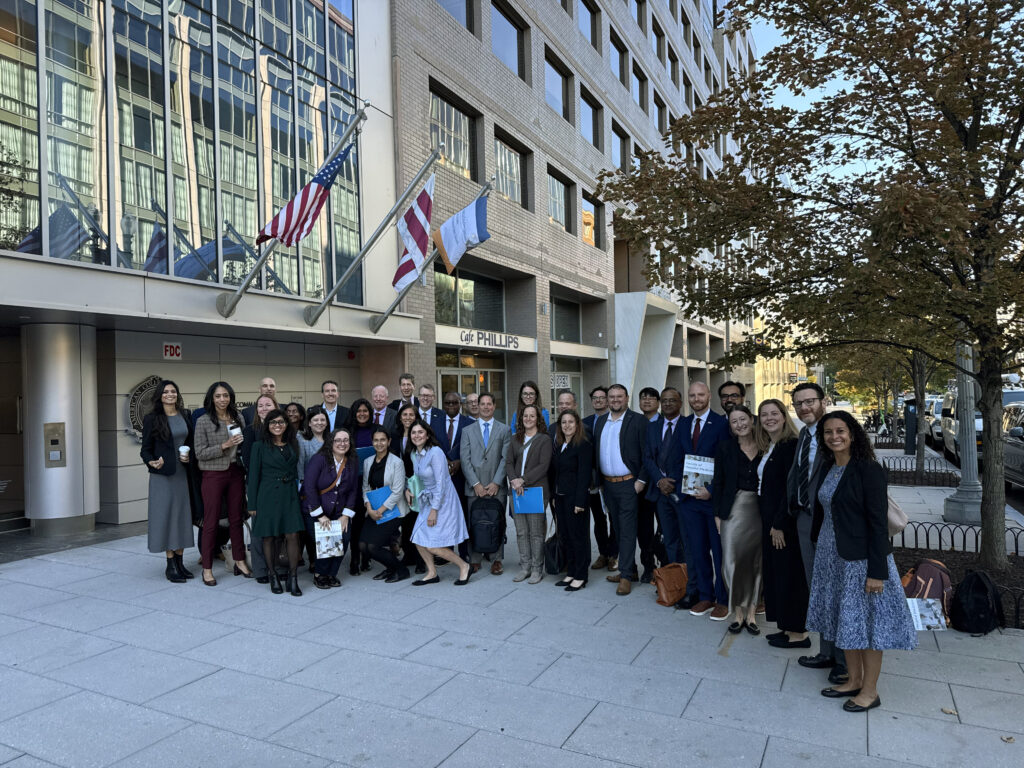
SHM Members attended SHM’s annual Hill Day this fall to advocate for hospitalists and their patients
It was standing room only at the morning debrief as members of SHM’s Public Policy Committee (PPC) and SHM Chapters gathered in Washington, D.C. to participate in SHM’s annual Hill Day. Hospitalists from across the country came prepared to champion increased access to skilled nursing facilities (SNFs) for Medicare patients, streamlining prior authorization within the Medicare Advantage (MA) program, and bolstering the physician workforce through immigrant visas.
Representing the Tampa Bay chapter, this was my first Hill Day experience. My long-standing interest in health policy has led me to various advocacy activities, such as calling representatives, writing letters to the editor, and registering voters. However, I had never directly engaged with a lawmaker or their staff about the real-world impact of policy issues on patients.
Advocacy always felt like a natural extension of my role as a hospitalist. We consistently advocate for patients, whether it’s with specialists to obtain an inpatient procedure or with insurance companies to secure post-discharge rehabilitation coverage. Yet, for a long time, speaking directly to health policy felt beyond my expertise. I viewed health policy as a “black box,” a domain reserved for lawyers, economists, and public-health experts.
That perception changed when I realized a crucial truth: no one is more qualified to speak about the impact of policy on patients than those of us who care for them every day. Once I embraced this perspective, meeting with lawmakers and sharing patient stories became much less daunting.
SHM ensured that participants, especially newcomers like me, felt prepared and at ease for Hill Day. They sent out materials in advance via email, detailing talking points for the three bills we would advocate for. On the day of the event, SHM provided a comprehensive packet that included paper copies of the talking points, a personalized meeting schedule, and a map of Capitol Hill. We’d been well warned to wear comfortable shoes.
Staff and consultants offered a thorough walk-through of the day’s expectations, covering everything from security procedures to business card etiquette. To further reduce anxiety, SHM staff even conducted a role-play of a typical meeting for those of us who lacked prior experience.
After the morning brief, we were off to the Hill to advocate for issues important to hospitalists.
Observation Reform
SHM continues to support the Improving Access to Medicare Coverage Act (H.R. 5138/S. 4137). This bill would count days spent in observation towards Medicare’s three-day inpatient stay requirement for skilled nursing facility (SNF) coverage.
This was one of the issues hospitalists advocated for during Hill Days for years. As with many advocacy issues, it takes multiple legislative cycles to gain traction and make progress. Observation reform remains a significant issue for hospitalists, who disproportionately face the burden of navigating the rules surrounding inpatient admissions and outpatient observation care. From the hospitalist perspective, patients admitted into observation are generally receiving identical care to those in inpatient status.
Historically, opposition to this reform has focused on concerns that it would lead to a significant increase in SNF utilization for Medicare patients, thereby incurring substantial cost expenditures. However, data from the COVID-19 public health emergency showed that expanding access to SNFs, regardless of the number of inpatient days during hospitalization, did not dramatically increase Medicare spending or utilization.1 This legislation would be narrower than the public-health-emergency waiver, allowing only patients who have a three-day stay (observation or inpatient) to get access to SNF coverage.
Allowing all in-hospital time to count towards SNF coverage eligibility, regardless of observation or inpatient status, will help ensure patients receive the medically necessary care they need in the appropriate setting and without facing unexpected and excessive out-of-pocket costs.
Prior Authorization Reform
SHM also continues to support the Improving Seniors’ Timely Access to Care Act (H.R. 3514/S. 1816). This bill would help reduce prior-authorization delays under Medicare Advantage by streamlining the prior-authorization process and encouraging plans to align their prior-authorization decisions with evidence-based guidelines.
The current state of prior authorization creates real patient harm. Hospitalists witness firsthand how patients remain in the hospital longer than necessary, which increases costs and carries the risk for hospital-acquired infections. Patients experience delayed or denied rehabilitation services, medications, and other necessary care. Delayed discharges exacerbate existing inpatient bed shortages and contribute to emergency department boarding.
The aim of this reform is to prioritize patients’ clinical needs over administrative burdens that create unnecessary barriers to physician-recommended care within the Medicare Advantage program.
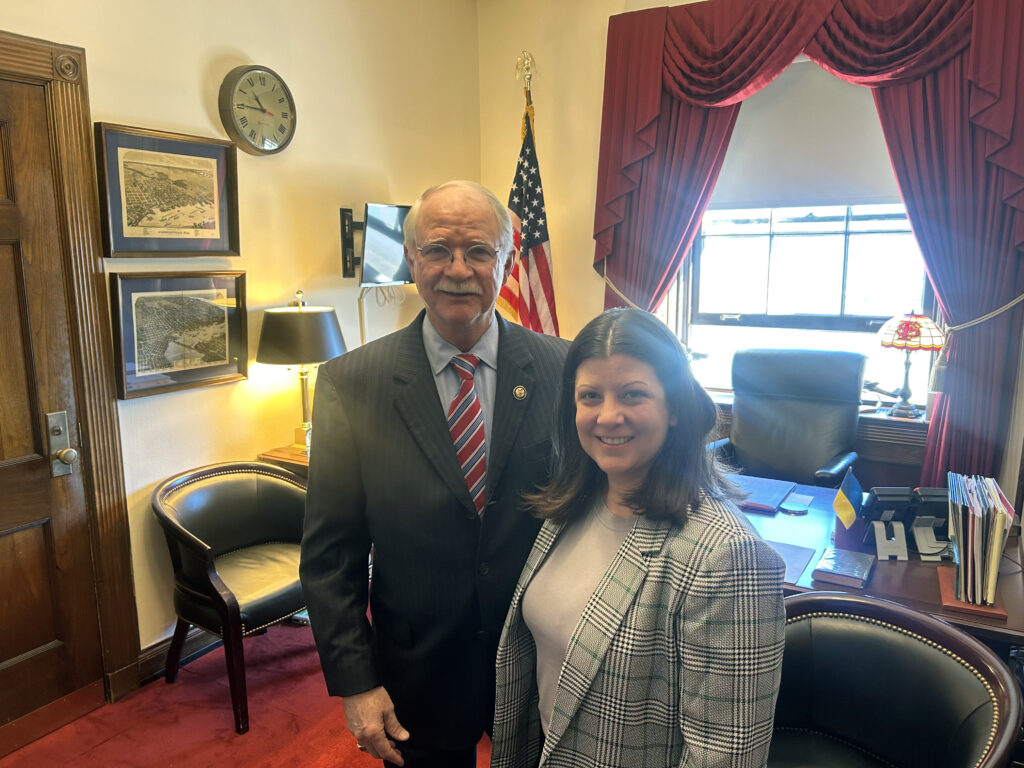
Dr. Caputo-Seidler met with her representative, Congressman John H. Rutherford (R, FL-05). After the Hill Day visit, Rep. Rutherford signed on to H.R. 3514, the Improving Seniors’ Timely Access to Care Act.
Recapturing Unused Visas for Physicians
SHM supports the Healthcare Workforce Resilience Act (H.R. 5283/S. 2759). This bill would recapture green cards that were previously authorized by Congress but went unused. It would allot up to 25,000 unused visas for nurses and 15,000 unused visas for physicians. Since these visas have already been authorized by Congress, they would not require additional funding. The bill also has built-in protections to ensure immigrant physicians pass background checks, meet medical licensing requirements, and prevent the displacement of American-born workers. According to the Association of American Medical Colleges, the U.S. is expected to face a physician shortage of approximately 86,000 by 2036.2 Hospital medicine is already experiencing the effects of this physician shortage. SHM estimates that two-thirds of hospital medicine groups have unfilled positions. These staffing challenges directly impact patient care, including the number of available staffed hospital beds. Immigrant hospitalists are essential members of the workforce and are particularly vital in rural and underserved areas where it is most difficult to recruit physicians.
Opening SHM’s Hill Day to Chapter members has allowed many hospitalists, including myself, to participate in advocacy on the Hill for the first time. Including Chapter members expands SHM’s reach. As the sole participant from Florida this year, for example, I was able to meet with staff from the offices of Representatives Rutherford and Castor, as well as Senators Scott and Moody. These meetings were made possible by my participation as a constituent in their district.
Even with the government shutdown, Congressman Rutherford (FL-5) made time to meet with me personally. He had already committed his support to the Improving Seniors’ Timely Access to Care Act. After hearing my accounts of the difficulty in securing skilled nursing placement for patients in observation, he also voiced his support for the Improving Access to Medicare Coverage Act. It felt like a big win for my first Hill Day meeting!
Throughout the day, staffers impressed me with their diligence, taking detailed notes and asking clarifying questions to fully understand the impact of these policy issues on patient care. Their appreciation for doctors traveling to D.C. to discuss these important issues was genuinely felt.
By sharing real-world stories of prior authorization delays, the SNF three-day rule, and physician shortages, I witnessed firsthand how the voice of the practicing hospitalist can inform congressional staff and lawmakers. Ultimately, no report or statistic can replace the power of a physician-led patient story. Our perspective is essential to policymaking.
SHM members can follow the active policy issues important to hospital medicine and visit the Legislative Action Center to send messages to their representatives. Members can also talk to their local chapter about sponsoring them to attend a future Hill Day.
 Dr. Caputo-Seidler is a hospitalist and assistant professor at the University of South Florida in Tampa, Fla.
References
1. Song A, et al. SNF 3-day waiver use during the COVID-19 pandemic. Avalere website. https://avalere.com/insights/snf-3-day-waiver-use-during-the-covid-19-pandemic. Published September 28, 2023. Accessed December 6, 2025.
2. GlobalData Plc. The complexities of physician supply and demand: projections from 2021-2036. New York: Association of American Medical Colleges; 2024. https://www.aamc.org/media/75236/download?attachment. Accessed December 6, 2025.