Every hospitalist knows the feeling: You open a new chart, and it feels like a wall. A patient with a dozen chronic conditions, care fragmented across multiple hospitals, specialists scattered across systems, and now they’re either a fresh ED admission or a new name on your list. The labs are abnormal—but are they baseline? The CT scans are many—but which one matters? The notes are long and numerous.
As a teaching hospitalist, I’ve watched residents and students face this same paralysis. I felt it myself as a trainee, and I still feel it now as an attending. Fortunately, it’s not common, but when it happens, the chart becomes a maze. You scroll, and scroll, and scroll, trying to get some meaning.
And that’s usually when I remind myself of something simple: Start with the patient.
I step away from the screen, walk into the room, and look at the person—not the chart. Within seconds, I know more about how sick they are than the last 20 minutes of clicking could tell me. It’s the old saying: “The patient looks better than the chart.” And sometimes the opposite is true—the chart looks benign, but the patient is crashing.
This gap between chart and reality is exactly where AI reaches its limits.
We talk a lot about AI in hospital medicine—AI scribes, AI summarizers, AI decision support. These tools are impressive, and they’re getting better. But they all share the same constraint: They only know what’s documented. If I, a trained clinician, struggle to piece together a fragmented, outdated, or contradictory chart, then an AI—no matter how sophisticated—will struggle in the same places. It cannot walk into the room. It cannot smell the infection, hear the work of breathing, or sense the unease in a patient’s voice. It cannot notice that the “mildly confused” patient is profoundly delirious. It cannot see the subtle decline that family members mention before any vital sign changes.
Hospital medicine is dynamic. Patients change hour to hour. Their trajectory is not captured in static text. For AI to understand the present moment, someone must first input the present moment. And that someone is us.
In an era where we’re tempted to believe that more data means more clarity, these complex patients remind me of the opposite. Sometimes the chart is confusing, but the patient is clear. And sometimes the only way to understand the story is to close the laptop, walk into the room, and begin again.
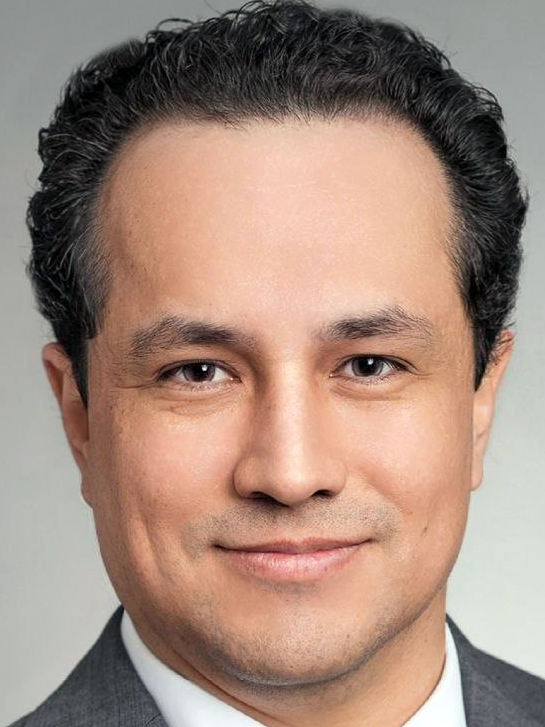
Dr. Ortega-Sandoya
Dr. Ortega-Sandoya is a hospitalist at Memorial Hermann Sugar Land in Texas. He is passionate about clinical documentation and teaching hospital medicine. He enjoys exploring the intersection of technology, reasoning, and narrative in modern medical practice and believes that clarity in documentation reflects clarity in thought.